
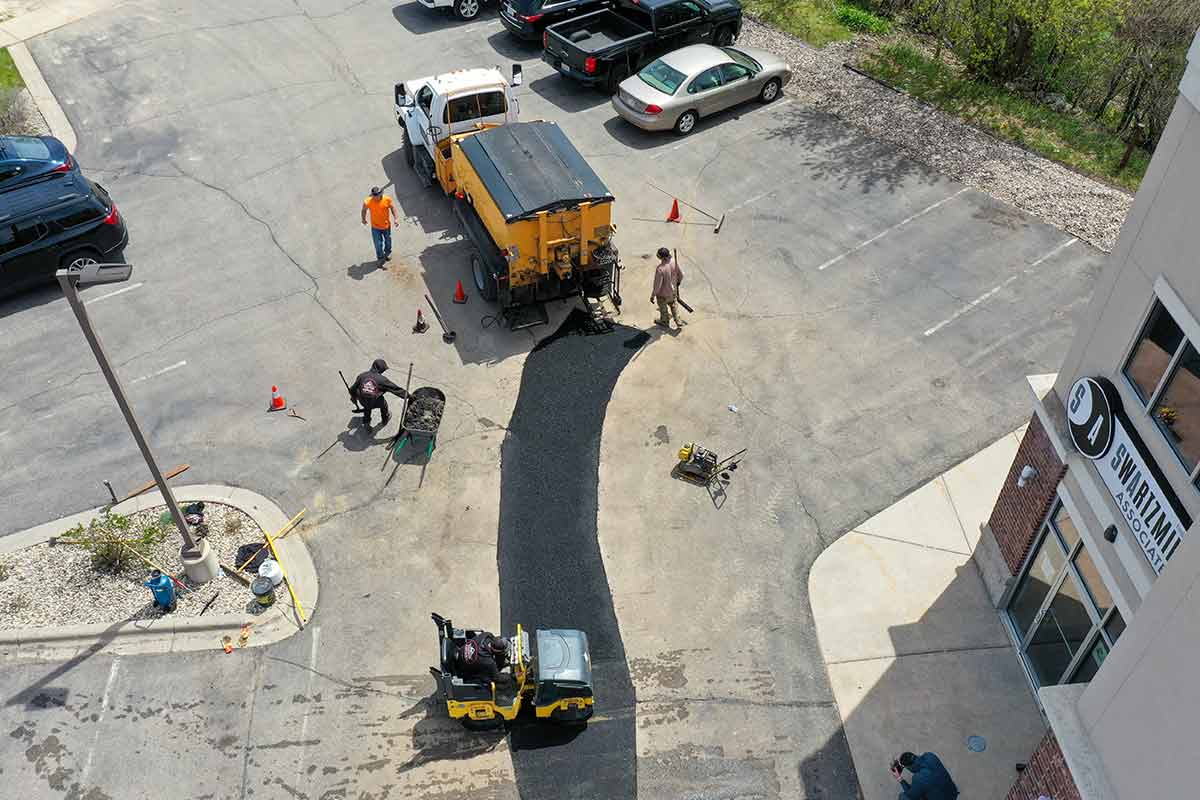
Infrared Patching
Thermal repair that fuses new material into the existing pavement — no cold joints, no early failure.
05 / Service
← View all servicesInfrared Asphalt Patching — Seamless Repairs for Potholes, Utility Cuts & Localized Failures
Infrared patching is the right answer when a saw-cut-and-patch would leave a cold joint that fails within a winter. We heat the existing asphalt in place, rake in fresh hot mix, and recompact — producing a seamless, fully bonded repair instead of a square patch sitting on top of the lot.
Our Process
Step-by-step,
self-performed.
- 01
Heat
Infrared heater warms the failed area to workable temperature — typically 4–8 minutes per panel.
- 02
Rake & Rejuvenate
Scarify the softened surface, remove failed material, add rejuvenator, and blend in fresh hot mix.
- 03
Compact
Vibratory plate or roller compaction to spec density — bonded edge-to-edge with surrounding pavement.
- 04
Reopen
Detack and reopen to traffic same day, often within an hour of patch completion.
Materials & Equipment
What we run
- Infrared asphalt heater panels
- State-spec hot mix asphalt (surface course)
- Asphalt rejuvenator to restore aged binder
- Vibratory plate compactors and small drum rollers
When It's Needed
Signs to look for
- Potholes — especially recurring ones in the same spot
- Failed utility cuts and trench restorations
- Birdbaths and low spots holding water
- Localized alligator cracking smaller than ~100 sq ft
- Trip hazards and ADA compliance failures
Problems It Solves
What it fixes
- Cold-joint failure around saw-cut patches
- Repeat potholes in the same location winter after winter
- Standing water in localized low spots
- Settled utility cuts and trench restorations
FAQ
Straight answers.
What's the difference between infrared and traditional patching?
Traditional saw-cut-and-patch leaves a cold seam where the new and existing pavement meet — that seam is where 90% of patches eventually fail. Infrared bonds the new material directly to the heated existing pavement, eliminating the seam.
When should I not use infrared?
Infrared is for surface and shallow base failures. When the issue is deep base failure or full-depth structural collapse, the right answer is remove-and-replace patching or section reconstruction.
How long do infrared patches last?
When the underlying base is sound, a properly executed infrared patch matches the life of the surrounding pavement. The patch is no longer the weak point.
Get a Quote
Ready to scope
your infrared patching project?
Property managers, GCs, and commercial owners — get a real, walked, written estimate from the crew that will actually do the work.